
Not a client, just someone I'd met socially. We'd been chatting for a while before they asked what I did for a living. "Financial planner," I said. They nodded, smiled politely, and then after a brief pause: "So what does that actually mean? Do you just… pick stocks?"
I laughed. It's a fair question, and honestly, if I didn't do this job, I'm not sure I'd know the answer either.
The truth is, what I do is quite hard to put in a box. It's not stockbroking. It's not accountancy. And it's definitely not just filling out forms (though I won't pretend there aren't any of those involved)
So let me try to explain it properly.
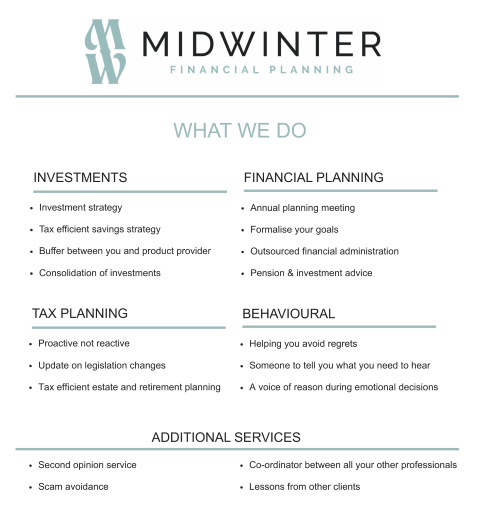
The planning bit - which is actually the most important
Before we talk about any investments or products, we talk about you. What do you want your life to look like? When do you want to stop working, or at least have the choice to? What would keep you up at night if it went wrong?
That conversation shapes everything else. Without it, any financial advice is just guesswork.
We meet annually, sometimes more, to revisit those goals, because life changes. Jobs change, families change, plans change. My job is to make sure your finances keep up.
The money bit - making it work harder
Once we know what we're aiming for, we look at how your money is structured. Are you saving in the most tax-efficient way? Are your investments appropriate for what you actually need? Could your pension be working harder?
I'm not trying to beat the market or pick the next hot stock.That's not what this is. It's about building a sensible, structured plan that gives your money the best chance of doing what you need it to do.
The tax bit - being proactive, not reactive
Tax planning isn't just for the wealthy. Most people are paying more tax than they need to, simply because nobody has taken the time to look at the full picture.
I keep an eye on changes in legislation, flag opportunities before the tax year ends, and make sure your estate and retirement planning is as efficient as it can be. Small things here can make a meaningful difference over time.
The behavioural bit - which might be the most underrated part
Markets go up and down. Pension values wobble. The news is almost always alarming us about something. In those moments having someone to call and give you a straight answer rather than a panic, is genuinely valuable.
I've talked more than a few clients out of decisions that felt right in the moment but would have cost them dearly in the long run. That's not me being clever. It's just having the perspective that comes from doing this every day and not being emotionally attached to your money the way you naturally are.
The other stuff
I also act as a co-ordinator between your other professionals i.e. your accountant, your solicitor or whoever else is involved in your financial life. I flag potential scams (which are unfortunately getting more sophisticated). And occasionally, I'm just a useful second opinion when someone is trying to sell you something.
Back to the party
The person I was talking to listened to all of this, then said: "Oh - so you're basically the person who makes sure everything doesn't go wrong."
I thought about that for a second.
Yeah. That's pretty much it.

